Will iconic images recorded in the grooves of an ancient vase unite the Holy Land or rip it further apart?
THE VASE
A novel by Mark M. DeRobertis
Muhsin Muhabi is a Palestinian potter, descended from a long line of potters. His business is run from the same shop owned by his ancestors since the day his forebears moved to Nazareth. The region's conflict saw the death of his oldest son, and rogue terrorists are in the process of recruiting his youngest in their plot to assassinate the Pope and Israeli prime minister.
Professor Hiram Weiss is an art historian at Nazareth’s Bethel University. He is also a Shin Bet operative on special assignment. With the help of fellow agent, Captain Benny Mathias, he plans to destroy the gang responsible for the death of his wife and only child. He puts a bomb in the ancient vase he takes on loan from Muhsin’s Pottery Shop.
Mary Levin, the charming assistant to the director of Shin Bet, has lost a husband and most of her extended family to recurring wars and never-ending terrorism. She dedicates her life to the preservation of Israel, but to whom will she dedicate her heart? The brilliant professor from Bethel University? Or the gallant captain who now leads Kidon?
Harvey Holmes, the Sherlock of Haunted Houses, is a Hollywood TV host whose reality show just flopped. When a Lebanese restaurant owner requests his ghost-hunting services, he believes the opportunity will resurrect his career. All he has to do is exorcise the ghosts that are haunting the restaurant. It happens to be located right across the street from Muhsin’s Pottery Shop.
Monday, October 17, 2016
Whisky not Whiskey - if you're British
Yes, whiskey is made in America. So if this were a story taking place in America or about Americans then, maybe they would be drinking whiskey. But it's not in America, and they're not Americans. Again, it's all taking place in British South African colonies and Zululand, so the whiskey they are drinking is whisky. Scotch whisky.
So I am glad I made that distinction before my John Dunn book was published. I'm no whiskey connoisseur. I'm not much of a drinker at all, actually, so I didn't know about the difference between whiskey and whisky. Fortunately, I continued my research, and when I researched the "whiskey" that British people drank, I learned it was "whisky" made in England or Scotland.
I also learned that bourbon is an American whiskey, and for that very reason it was probably not served in South Africa where the British had established their colonies. So I changed all scenes that had bourbon or "whiskey" to scenes with Scotch whisky. And I made these corrections in time, thank goodness, so that my story, John Dunn; Heart of a Zulu will be more authentic.
Btw, brandy is okay. The British did drink Brandy. Brandy and Scotch whisky. So I sent the new file last night, and hopefully, I won't be finding any more errors. But if I do, I'll fix them. Just want to make sure I fix them in time. Stay tuned. John Dunn, Heart of a Zulu is coming soon!
Tuesday, October 11, 2016
Nineteenth Century Muskets and the John Dunn Story
The Minie ball projectile was called a Minie ball for its inventor, a dude named Minie. It was cone shaped, somewhat like a modern day bullet. And because of the cone shape and the grooves in it, along with the rifled barrel, the Enfield 53 could shoot farther and with more accuracy than the muskets used prior to that. Of course, shortly thereafter, the breech-loading guns came out, and one of the first of those types was the Holland & Holland double-barreled rifle, which John Dunn had written about in his autobiography, John Dunn, Cetywayo, and the Three Generals. That was, of course, one of my main sources for my book. Dunn also wrote about his Snider, which was another breech-loading rifle he used and wrote about.
So in my book, John Dunn; Heart of a Zulu, which is due to be released next month, I made note of the Holland & Holland rifle Dunn used, and I made note of the Snider. But beyond those two rifles, Dunn didn't name the guns he used. Sure all the historians wrote about the Martini-Henrys, which was the British military gun issued to British regulars. It was the rifle the British used during the Anglo-Zulu War and a state of the art gun at that point.
So the book is good for now as far as editing is concerned. I sent my latest revisions yesterday, and I'm just waiting for the edits to start. And when they do, I'll be sure to let you know. All in all, I'm thinking my John Dunn book will be my best. It's the longest, the most involved, and it's based on a true story. Yes, I added some fiction. I gave Catherine Pierce a larger role in my story. No other writer or historian had much to say about her. Not even John Dunn in his autobiography had much to say about her or any of his other 48 wives. Still, I wanted a strong female character in the story, and I figured she was the right person for the part.
It was noted by several historians that Catherine Pierce was not happy about Dunn taking those additional wives. So there's some true life conflict right there for the story. Not that a story that spans the years between the Zulu Civil War and the Anglo-Zulu War is in need of any more conflict. It's already overflowing with conflict. But hey, there were no women involved in those conflicts, other than the 20,000 women and children Prince Cetshwayo and his army slaughtered in the Battle of enDondakusuka. Nevertheless it all makes for a very rounded and intriguing story. Stay tuned.
Friday, September 11, 2015
The Eternity Drug
Yes, I did my research. I read all about mitochondria and the role it plays in the human system. I invented the drug, Eternity, and made it so that daily injections enable a daily rejuvenation of the healing capability. But of course, as with all 'wonder drugs' there are side effects. And it's the side effects that draw the world's greatest martial artist into the story line. Like roid rage, the drug causes unpredictable events of murderous frenzy. And because Eternity's users are the rich and famous, they are found innocent and/or the charges are dropped.
It was the OJ Simpson trial that inspired the story line. OJ, the famous, rich celebrity, was acquitted of murder even though everyone and their dog knew he did it. Same with Robert Blake. I'm sure there are others, but off the top of my head, OJ and Blake are my examples. They were innocent by way of fame. And that's what's happening in my story, but on a much larger scale. Until Trent Smith has had enough. For every murderer who dodges justice, there is another tier of justice waiting in the street. And its name is Trent Smith. Buy Killer of Killers today, and part two, Killer Eyes, will be available perhaps as soon as next week!
Monday, July 27, 2015
Outlining Book Three in the Killer Series
But the question to a storyline like that is how could Trent Smith get involved in something like that, since he works for no one, particularly no gang or mob. Well, there are ways. And I've solved that question. Now I have to flesh out the plot, the subplots, and figure out what role each character will play, and figure out just what new characters I want to include.
Yes, the bottom line is that Trent Smith is my favorite character. He's up there with James Bond, Captain Kirk and Conan. Trent Smith, the world's greatest martial artist, who believes that guns and knives are the weapons of cowards. Let the action continue in Book Three of the Killer Series. I'm working on it. And just in case you've forgotten, Book Two in the Killer Series, called Killer Eyes, will be released as soon as next month! Can't wait for that one. So get your copy of Book One today, and then you'll be ready for Book Two next month, and Book Three sometime in 2016.
Thursday, April 30, 2015
Research Key to Authenticity
I knew martial arts because I had trained in Ju Jitsu when I was younger and my son was training in Ju Jitsu at the time, which gave me great access to the local dojo and the senseis and shihan there. I did some research when it came to chemicals, poisons, and the scientific elements involved with the drug in the story. One thing that helped me was my experience working in a drug company. Syntex, the maker of Toradol and Naprosyn (AKA Aleve) is located in my neck of the woods, and I worked there for a year or two, and I became familiar with the processes and procedures of drug production. I used that knowledge in my book, Killer of Killers.
The Vase is a ceramics based story, and that's what I am. A ceramicist. I don't throw pots, but I do make ceramic sculptures, and I know how to throw pots, meaning I've done it before. But I did have to do a lot of research about Nazareth, Judaism, and Islam. Plus I had to research things like Shin Bet which is the Israel Security Agency.
When I wrote Killer Eyes I researched a lot about nuclear medicine. That's how the drug in the story evolved. I learned a lot about radioactivity, radioactive half-life, background radiation, radioactive elements, radiopharmaceuticals, and even Chinese funeral practices.
But when it came to John Dunn, wow, that's where the research had to kick in full gear. That involved more research than all the books put together. I had to read no less than five or six separate books about the Zulus, the Zulu War, John Dunn, and King Cetshwayo. Not to mention all the online sites I looked up. That was a lot of reading. But I did it. I'm not calling myself an expert on the Zulus or the Zulu War, but I learned enough to write the book. It focuses on John Dunn's experiences between the years 1856 and 1879, and that's where I focused my research.
It was fun. Time consuming, but fun. And now it's ready to be published. If all else fails, I know I can get it published with one of my two current publishers. But like I said before, I want to step up from POD. That's my goal for John Dunn. We'll see how that goes.
Friday, April 5, 2013
Catch Those Errors Now
Well, there is something that could be worse. Getting something so wrong that readers will think you didn't do your research. Now, I did do a good amount of research in The Vase, and learned about Mossad, the Kidon, and the IDF. But in that research I missed Shin Bet and Aman. But as I go back and research it now, I can't believe I missed Shin Bet and Aman. After all, they are two of the three main intelligence "communities" in Israel, and have been for some time. When I research them now, they are there plain as day. How did I miss them before?
To be clear, Aman is the military intelligence branch, Shin Bet is the national or domestic intelligence branch, and Mossad is the foreign or international intelligence branch. So if the intelligence activities were to take place outside of Israel's borders, then it's on Mossad. But within Israel, it's all about Shin Bet. So my story, taking place in Nazareth, which is inside of Israel, would be under the jurisdiction of Shin Bet.
So, okay, I got that now, and in time. I'm making all the changes and all the adjustments. The Vase will be legit now, and I won't look like a dummy for using the wrong agency. But I still can't believe I missed it before. No worries, it's not missed now.
Monday, March 4, 2013
Finished Going Over Edits in The Vase
But this time, it wasn't just one editor, it was at least two, and at least three editorial passes. And as a result, you can say that The Vase was put through the editorial "wringer." Boy was it ever. And I'm glad for that. I mean, if I want it to be considered a literary piece worth its salt, I do. And I do.
Virtually every detail worth mentioning in a literary sense was tackled. And I went with it. I didn't object to any of it. Sure there were a couple places where the editors weren't on the same page as me. A couple places where they misunderstood what I was doing, but that was smoothed over. And I didn't know that they were going to require a "source" for the historical figure I mentioned in the book.
That figure was the Roman Military commander in Israel early in the first century. In The Vase, I made that man Marcius Rufus. And the editors wanted the link to confirm that. Fortunately, I did my research, and I had the link. It was a website that had actual letters written by Pontius Pilate when he was on his way to assume the governorship of Israel. Traveling with him was Marcius Rufus, and Pilate made a reference to Rufus being his chief military officer.
So I'm good. But before I send this back, I want to at least review it again. Not read it through word by word, but review all my comments, and all the things I changed. Just because I've learned that that is the smart thing to do. I've learned many times not to be quick on the trigger. Wow, if nothing else, I've learned that. So maybe I'll email Penumbra and tell them I'm done, but that I'll be sending it tomorrow. That's the smart thing to do. And it's what I'll do.
Friday, September 28, 2012
Killer of Killers - a Martial Arts Thriller
I'm not dissing them. I'm sure they're good books. But at the time, I was writing Killer of Killers, and my mind was probably geared more to writing than to reading. I picked up the Rain books from the library, because I read somewhere that you should read in the genre that you are writing. But as I said, I couldn't last through even the first one.
But I'm not so sure that you have to read books in the genre you want to write. Maybe for some genres, but for martial arts novels? I don't think so. You do have to do research. And I did. I researched like crazy. I researched martial arts dojos, and actually spent a lot of time at one. It's the one my son attended for ten years. I got to know the Shihan pretty well. I interviewed him for the purpose of writing the book, even. I talked to a lot of the senseis over there, too.
I researched the moves, the throws, the blows, the philosophies, the history, and incorporated all of that into Killer of Killers. You might say that the Shoji Tokyo Dojo is based on the dojo my son attended. And that's a good thing. It gives a realistic portrayal of a dojo, and the people who train there. But I also researched a ton of medical data, too. Because Trent Smith is an expert at attacking nerves and the circulatory system. He can kill with a single strike. But he doesn't have to kill. He can also paralyze, blind, cripple, and alter the way he strikes to exact any range of the above.
So, no. Trent Smith isn't just a killer of killers. He can do and does everything in between. And as far as I know, Killer of Killers is the only book with a character who does all of those things in a single story. Yes, Trent Smith is a great hero. He's up there with James Bond and Conan. Two of my all-time favorite heroes. There's always room for another great hero. Trent Smith has arrived.
Wednesday, March 28, 2012
Research Should be Varied
In KILLER EYES, the research is in Nuclear medicine. That is the turn the story takes. But how many people are hip to nuclear medicine? Nuclear physicists, perhaps. But now I'm pretty familiar with it. Not so much that I could teach an advanced class on nuclear medicine, but enough to concoct a story that contains that element.
One thing that results from writing books, I must say, is that you become a little bit smarter about a lot of different things. Reading those books will make you smarter, too. That's pretty cool.
Friday, March 2, 2012
Research Key for Authenticity
If you want your book to be believable, even if it's fiction, you'd better do your homework. And in the case of writing a story, that homework is research. Otherwise readers will lose interest and quit reading. That means they put your book down, and it's all over.
It's especially true for historical fiction, like in my latest novel, JOHN DUNN, but it's also true for every novel. For THE VASE, I had to do tons of research on the Middle East, on Israel, and on the religions of the region. I looked up both Jewish and Muslim prayers and weaved them into the story in a realistic way. I had to do a lot of research on Nazareth and the Old City Market where Muhsin's Pottery Shop is located.
In KILLER OF KILLERS, I inundated myself with research on the Martial Arts. Luckily I had access to a well known dojo here in my part of town. But I also researched anatomy, particularly the nervous system and the circulatory system, since Trent Smith, the MC, is an expert at dealing death by striking the nerves, veins, and arteries in his enemies' bodies.
And the medical research for KOK was important, too. I had to figure out how a medicine might be able to cure all disease and stop aging. It may be far-fetched, but I actually discovered a way that makes it sound plausible. How? Well, you'll have to read the book. But what I found out through research sounds like it might actually work if some ambitious biochemists want to take a crack at it. I hope some of them read the book. It would be interesting to hear their take on that.
Monday, December 19, 2011
Tired of Research
But you know what? When I reread portions of what I've written so far, I like it. Sometimes I get the notion to post segments on here. Don't know if that's a good idea. Better if I let some of those British dudes on the Zulu War forum check it out. I think that might be a good idea.
Oh well. Keep it going. That's all.
Friday, October 28, 2011
Back to research
So I am researching the details of all three battles, just to make sure I get them right, and to figure out how much of them I want to actually put in the story. I have a lot of subplots that take place in these battles. For instance, not only does John Dunn fight in the battle to relieve the besieged Brits at Eshowe, two of Shepstone's sons fight at Isandlwana and one of them gets killed. It's some very interesting reading.
Friday, October 7, 2011
Setting a Goal
The Anglo Zulu War has so many different aspects to it, that I really can't include them all. I'm hoping, however, that the enthusiasts of that period will be satisfied in the way that I do portray it.
For instance, there were many factors that contributed to the outbreak of the war. And many different personalities were involved. I have trimmed it considerably, and limited the cause to the two major factors. I think it's enough. Maybe some purists will disagree. So I better get used to the idea that you can't please everyone.
That's all for now. I'll know more when I'm actually done.
Tuesday, September 27, 2011
No Time to Read for Pleasure
It's not like I'm one of those types of people who reads a new book every week or every month, but I have been known to read a book now and then. But since I became an author, that doesn't happen any more. And you know what? I do miss it. A little.
So will I ever get back into the phase of reading for pleasure? Probably. But it depends on whether I will keep writing my own books. And I'm not sure I will. Since I started my first book, I have been gung ho for writing. My first novel, KILLER OF KILLERS, which I love, by the way, I was fully charged. That mode was in full force for THE VASE. I just loved the concept, or the premise for that story, and of course, I still do.
Then for the sequel to KOK, KILLER EYES, I kept that phase alive, with the further exploits of Trent Smith, and possibly the conclusion to the Trent Smith story. (Because it won't be continued, unless it gets PUBLISHED!
And for John Dunn, Heart of a Zulu... Well, let's just say, since it's based on a true story, I felt that it was a story worth telling. It's been told before. The biography, John Dunn, The White Chief of Zululand, is out of print. I can't find it anywhere. Yeah, on Amazon, there's one copy available but for over four hundred bucks. Forget that.
And there was another book, I've heard, that featured the story of Dunn, by a writer named Oliver Walker, published in the 1940s. I finally ordered it. It's coming from South Africa and hasn't arrived yet. I'll see how that one differs from mine. But will it be reading for pleasure or research. Um... maybe a little of both.
Monday, September 26, 2011
Summer Over
Dunn had to fight with the British, and I want to make it a crunch time decision for him, but also a motivating one. Something has to happen to make him get off the fence. Yes, he wanted to stay neutral, and that is historically documented. Yes, he sided with the British, and yes they threatened him into doing it.
But to make the story more interesting, I am planning on a fictional event that really propels him to the British side, on top of the other stuff. But first... finish the research.
Friday, September 23, 2011
Back to Research
And now that I am nearing the conclusion of my manuscript, which is the Anglo-Zulu War, I really better go back to Morris and absorb what he wrote about the British invasion into Zululand. I certainly am not getting everything that really happened into my book. There are so many characters involved on all sides, and a lot more factors that led to the war than what I'm putting into my story.
Because if I put everything in there, and everyone, it would distract from the story of John Dunn, and it would probably make my book over 600 pages or more. Forget that. I am striving to focus on Dunn's story, which of course does involve the war in a big way. But I want to be close to the historical truth, so I'll be back to reading for the next couple weeks, and then I'll finish my book.
Wednesday, July 20, 2011
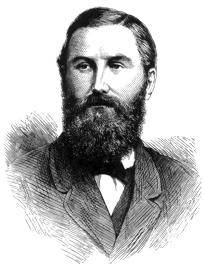
Best photo yet of John Dunn in prime
Well, here he is. The MC of my WIP. It's actually a lithograph of a portrait photo, but regardless, it's a much better version of the poor quality photo I posted a week ago, and therefore a better opportunity to see what he looked like before he got old and lost his hair.
So does this guy look like he could have 49 or 65 wives? I'll leave that to the ladies to decide. But aside from being a lady's man, he was a father of many, many children. Sources vary, as I wrote about yesterday, but some say he had 117, and other sources say over 150!
The strange thing about it is that none of these sources, not even his own notes, mention much about his family life. I mean the different books and websites confirm that he had all the wives and all those kids, but none of them say much about them, except that he built each wife her own house, and provided for all of them.
But there is one episode where he mentions that his eldest son was ill, and that the Zulu king sent his witchdoctors to cure him, (and they did!) But that's pretty much it.
Oh well, it's things like this that make me glad this is a NOVEL I'm writing.
Tuesday, July 19, 2011
Conflicting Sources?
And don't even mention spelling. Uh oh, I mentioned it. When it comes to Zulu words, not one of the four books I have is consistent with another. It seems that every different source, online sites included, have their own way of spelling every single Zulu word!
I've counted up to four different ways Cetshwayo is spelled. At least John Dunn is the same everywhere, but it's all different with everything Zulu.
So I'm going with what works. As long as my book is consistent with itself, that's what matters. So for instance, Cetshwayo will be spelled like that every time. Same with every other Zulu word.
And when it comes to the events, which are also different in every book, well, hey, it's a historical NOVEL, so that one's going to be my call.
Friday, July 8, 2011
Into Chapter Three
I'll keep thinking. Meanwhile, I'll keep writing, too. But today most of my time was spent reading the books I have on the man, and serfing the net in research mode.
Not sure if that forum is going to help. So I emailed Dan Dunn. He's a direct descendant of John Dunn. He's a tour guide over there in South Africa. Hopefully he'll respond with some positive vibes and some info I could use. We'll see.